
Atomic Energy Commission chairman Ajit Kumar Mohanty stated that India is on the verge of a significant technological transformation, driven by advancements in AI, quantum technologies, and other fields. Speaking at BIT Mesra's convocation, he emphasised the need for strong indigenous capabilities, skilled professionals, and interdisciplinary collaboration to achieve a developed India. Other speakers, including BIT Mesra's Chancellor and Vice Chancellor, echoed the importance of continuous learning and contributing to national progress.

The BRICS New Delhi Declaration has endorsed India's proposals for a Working Group on Sports Technology and a Sports Goods Manufacturing Conclave, aiming to enhance cooperation and innovation among member nations in the sports sector.

Hindustan Copper Limited CMD Anupam Misra spoke at the 85th CSIR Foundation Day, advocating for workplace safety, employee welfare, and scientific excellence. He stressed the importance of continuous learning, innovation, and bridging research with industrial applications to support Viksit Bharat 2047. CSIR-NML Director Dr. Sandip Ghosh Chowdhury also highlighted CSIR's legacy and its role in India's technological self-reliance.

Fintech firm PhonePe has signed a Memorandum of Understanding (MoU) with the Ministry of Electronics and Information Technology (MeitY) to integrate its enterprise data intelligence platform, PulsePro, into the PM GatiShakti framework. This collaboration aims to provide granular, hyperlocal insights for national infrastructure planning, economic analysis, and holistic urban and rural development.

The Unified Payments Interface (UPI) has completed a decade since its launch, becoming the backbone of India's digital payments ecosystem. It has seen exponential growth in transaction volume and value, expanding financial inclusion and setting a global benchmark for real-time payments.

Tata Sons Chairman N Chandrasekaran affirmed India's robust economic position amidst global uncertainty, emphasising that energy security, advanced manufacturing jobs, and investment in human capital are 'critical' for sustaining the nation's long-term growth.
Ministry of Information and Broadcasting Secretary Chanchal Kumar outlined the critical factors for the media and entertainment sector's next growth phase, including robust intellectual property, sustainable revenue models, and disciplined investments. Speaking at the CII Big Picture Summit, he emphasised the government's role in fostering an environment for creative enterprises and addressing challenges posed by digital platforms and AI. The CII White Paper also projected a USD 100 billion Indian M&E sector, advocating for stronger IP and regulatory reforms.

Artificial intelligence major Anthropic has launched AI inference capabilities in India through Amazon Bedrock, allowing its Claude AI models to process data within the country's jurisdiction. This strategic move addresses the growing demand from Indian entities, particularly in regulated sectors, for compliance with local data processing norms as per the Digital Personal Data Protection Act. The initiative strengthens Anthropic's commitment to the Indian market, enabling secure and compliant AI deployment for sensitive workloads and fostering trust among major enterprises like Reliance, CRED, and NPCI.
Union Minister Jitendra Singh stated that human-led artificial intelligence will be the defining force in India's journey to becoming a developed nation by 2047. Speaking at the 29th National Conference on e-Governance, he emphasised that technology must strengthen governance without replacing human accountability, advocating for responsible AI deployment with citizens at the centre. The conference concluded with the adoption of the Jaipur Declaration on e-Governance 2026, outlining a roadmap for AI-enabled, data-driven, and secure digital governance.

The official Congress Keralam 'X' account posted a controversial message against CJI Surya Kant, which quickly went viral before being deleted. The party subsequently removed the individual responsible, with KPCC president Sunny Joseph stating the post was unauthorised and did not reflect the party's stance on judicial impartiality. Union Minister Kiren Rijiju criticised Congress over the incident.
Comptroller and Auditor General of India K Sanjay Murthy highlighted the need for stronger accountability systems to support India's urban transformation and sustainable mobility push at the BRICS Supreme Audit Institutions Leaders' Summit in Bengaluru.
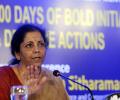
Union Finance Minister Nirmala Sitharaman expressed strong confidence in India achieving over 10 per cent economic growth, advocating for increased technology adoption and innovation. She urged overcoming scepticism and highlighted technology's transformative role in agriculture and public sector reforms, while also launching a new fund and book at an IIT Madras event.

A political storm has erupted with the Opposition demanding the removal of Chief Election Commissioner Gyanesh Kumar, following reports that two Election Commissioners raised 'expansive red flags' over the Special Intensive Revision of voters' lists, citing issues like name deletions and decisions made without their knowledge.

Few leaders since Independence have been able to establish such a direct connection with the electorate or shape the national conversation to the extent that Narendra Modi has done over the past decade, points out former Union minister Dr Karan Singh.

India is making a significant push to establish itself as a global semiconductor manufacturing hub, driven by strategic investments and policy support. The upcoming SEMICON India 2026 event will showcase the country's advancements and ambitions in this critical industry, which underpins virtually all modern electronic devices and has faced global supply chain vulnerabilities.

Digital money is gradually starting to behave like software. It's no longer inert -- sitting passively in accounts. In the not-so-distant future, your money could become 'smart' and 'active,' understanding your preferences, paying your bills automatically, optimising your returns, and managing your risks -- all without you having to manage the details.

A group of 124 former IAS, IFS, IPS, and allied services officers have issued an open letter defending the Election Commission (EC) and the Special Intensive Revision (SIR) process. They argue that the electoral system cannot be deemed rigged only when a party loses, citing instances where the ruling BJP lost elections under the same EC. The officers highlight the legitimacy and necessity of the SIR for cleaning voter rolls and underscore the robust safeguards within India's electoral system.

The question for the next 20 years is not whether India can become a $5 trillion or $10 trillion economy. Those are attractive targets, but the real question is whether India can create enough productive jobs, educate its children properly, make its cities liveable, and give hundreds of millions of people a substantially better life, asserts Ramesh Menon.

National Stock Exchange (NSE) Chairman Srinivas Injeti stated that post-listing, the exchange's duties as a stock trading marketplace and its responsibilities as a commercial entity will see public interest overriding business interests if the two intersect.

Prof Ajit Kumar Chaturvedi, Vice-Chancellor of Banaras Hindu University, highlighted Artificial Intelligence's transformative potential in healthcare, emphasising its role in augmenting doctors' capabilities and enhancing efficiency. Speaking at PGIMER's Foundation Day, he stressed the need for India to develop AI solutions tailored to its unique healthcare realities, moving beyond being a mere consumer of Western-trained systems. PGIMER Director Vivek Lal also detailed the institute's expansion and commitment to affordable healthcare.

National Security Advisor Ajit Doval shared a pivotal moment from his early IPS career at IIT Roorkee's convocation. He recounted how a border surveillance team he dispatched was captured by the Chinese army, leading him to believe his career was over. Despite being cleared by an inquiry, the incident deeply distressed him, ultimately teaching him valuable life lessons from a Tibetan Sherpa.

Prime Minister Narendra Modi, addressing the BRICS summit, called for a fundamental shift in global governance, advocating for the replacement of the current 'pyramid of privilege' with a 'platform of partnership' where the Global South becomes a 'rule shaper' rather than a 'rule follower'.
Vice President CP Radhakrishnan launched Gnani Artha, an end-to-end sovereign AI stack for Indian enterprises and public institutions. He emphasised that new technologies, including AI, will enhance ease of work and create more jobs, drawing parallels with the IT industry's growth. The initiative, backed by the India AI Mission, aims for self-reliance and includes the Gnani Evon v3.3 language model and Gnani Plexus AI platform, offering cost-effective Indic language capabilities.
Vice President CP Radhakrishnan launched Gnani Artha, an end-to-end sovereign AI stack for Indian enterprises and public institutions. He emphasised that new technologies, including AI, will enhance ease of work and create more jobs, drawing parallels with the IT industry's growth. The initiative, backed by the India AI Mission, aims for self-reliance and includes the Gnani Evon v3.3 language model and Gnani Plexus AI platform, offering cost-effective Indic language capabilities.

Neeru Dhanda made history by becoming the first Indian woman to win an individual shotgun gold at the Asian Games in women's trap. Her inspiring journey began with a borrowed gun and practice at a pond, overcoming financial hurdles and recent illness, culminating in a record-breaking triumph. She dedicated her medal to soldiers and late champion Raja Ranjit Singh.

Sports Minister Mansukh Mandaviya affirmed India's commitment to hosting the 2030 Centenary Commonwealth Games in Ahmedabad, promising an exceptional event and a lasting institutional legacy. He highlighted India's support for governance reforms, anti-doping measures, and initiatives like Khelo India, while also advocating for a stronger, member-driven framework for Commonwealth sports.

A three-day 'AI Champions for Digital Governance' programme has commenced in New Delhi, hosted by ITDC, SCOPE, and LBSNAA. The initiative aims to train senior leadership and operational teams in applying artificial intelligence within public sector organisations, aligning with the IndiaAI Mission. Experts highlighted AI's role in improving efficiency, productivity, and public service delivery, while also emphasising responsible adoption and data quality. The programme seeks to build an AI-ready nation and contribute to India's vision of future-ready governance systems.
A three-day 'AI Champions for Digital Governance' programme has commenced in New Delhi, hosted by ITDC, SCOPE, and LBSNAA. The initiative aims to train senior leadership and operational teams in applying artificial intelligence within public sector organisations, aligning with the IndiaAI Mission. Experts highlighted AI's role in improving efficiency, productivity, and public service delivery, while also emphasising responsible adoption and data quality. The programme seeks to build an AI-ready nation and contribute to India's vision of future-ready governance systems.
The move comes amid growing demand from organisations in India for local access to Claude.

BRICS finance ministers and central bank governors have called for increased representation of emerging-market and developing economies in the IMF and World Bank, while also criticising unilateral tariffs and trade measures, as the expanded bloc aims to bolster financial cooperation amidst global fragmentation.

Prime Minister Narendra Modi employed Gen Z-friendly phrases like "OG" and referenced the film 'Dhurandhar' during his address at Delhi University's Shri Ram College of Commerce. This move, 13 years after a previous impactful speech at the same venue, is part of a broader strategy by the BJP to connect with younger audiences, contrasting India's past challenges with its current global standing.

The search for N Chandrasekaran's successor as Tata Sons Chairman has reportedly narrowed to Tata Steel CEO T V Narendran, Tata Sons Executive Director Saurabh Agrawal, and NSE MD & CEO Ashish Chauhan, with Chauhan emerging as a potential 'dark horse' candidate.

'Improved law and order and transparent governance have helped change UP's investment image.'

90 per cent of institutions recorded no improvement in international student metrics, despite government initiatives such as the Study in India programme, UGC regulations on internationalisation, and efforts to attract foreign students.
Chief Justice of India Surya Kant urged national law universities to proactively lead the integration of technology into the legal system, rather than merely reacting to changes. Speaking at a conclave, he stressed the importance of incorporating academic integrity and responsible AI use into the curriculum, rejecting outright bans on generative AI. The CJI highlighted that law schools must prepare graduates to critically engage with technological tools, ensuring justice, fairness, and human judgment remain central to the evolving legal landscape.

The India-Africa Forum Summit, scheduled for May 28-31 in New Delhi, has been postponed due to concerns over the Ebola virus outbreak in Africa. The Ministry of External Affairs announced that new dates will be finalised in consultation with African nations.
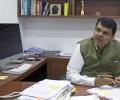
Maharashtra Chief Minister Devendra Fadnavis announced the state's ambition to become India's leader in quantum technology. The state plans to build a robust ecosystem, align with the National Quantum Mission, and train over 5,000 professionals, recognising AI, semiconductors, and quantum tech as key pillars for future growth and global competitiveness.

New Delhi must look for formal, institutional statements issued directly from Washington rather than rely on casual pronouncements meant for local audiences, notes Ambassador Rajasekhar.

Guests at President Droupadi Murmu's Independence Day 'At Home' reception will be welcomed with handwoven Maheshwari stoles, celebrating the vibrant art traditions of Chhattisgarh, Goa, Madhya Pradesh, and Maharashtra, alongside an invitation package highlighting sustainable environmental practices.

The National Health Authority (NHA) is promoting the National Health Claims Exchange (NHCX) to standardise and simplify health insurance claims processing in India, aiming for a seamless and reliable digital infrastructure similar to UPI.
